Monday, April 4, 2016

Machu Picchu: Unveiling The Lost City Of The Incas

American archaeologist and politician Hiram Bingham made history when he revealed to the world the 15th century citadel, standing 2,430 meters or 7,970 ft above sea level, perched on the ridge of the Andes Mountains in Peru. The archaeological discovery of the “lost city of the Incas” proclaimed to the world the magnificence of an Incan fortress made up of indescribable designs and extraordinary features. 

Although historians are still unsure about why it was built and why it was abandoned, the mystery only adds to the spectacle of the visual wonder and architectural masterpiece. With Bingham’s findings being questioned, experts continue to modify, correct, and uncover the legend of Machu Picchu, which was declared a UNESO world heritage site in 1983.

Image Source: travelculturemag.com

There are others who point out that Machu Picchu was merely a retreat built for Inca Ruler Pachacuti, who wasn’t quite fond of the noise and congestion in the city life. There were about 200 buildings in the site, each constructed with granite stones cut into polygonal blocks, which were fitted with precision against each other to hold the walls.

Experts are puzzled as to how the Incans were able to build such complex cities. They don’t know how the tribe made calculations and measurements but evidence suggests that they used dry stone technique to put together the bricks without using mortar, wheels, and any material to hold them together. The mortar-free construction is truly a remarkable feat, considering that granite stones are extremely hard to cut, even with use of modern equipment. Aside from the perfect smoothness, straightness, and alignment of the bricks, the earthquake-resistant quality of the structures was also noteworthy given that Peru endured many earthquakes over the time it has stood in the Andean mountain region. Though not much is known about its construction, it’s without a doubt a source of national pride and an architectural and engineering tour de force. 

Image Source: famouswonders.com

Machu Picchu is a dream destination for architect and interior designer Jonathan Bunge. Follow him on Twitter and join him in his journey towards some of the world’s best architectural sites.

Tuesday, January 26, 2016

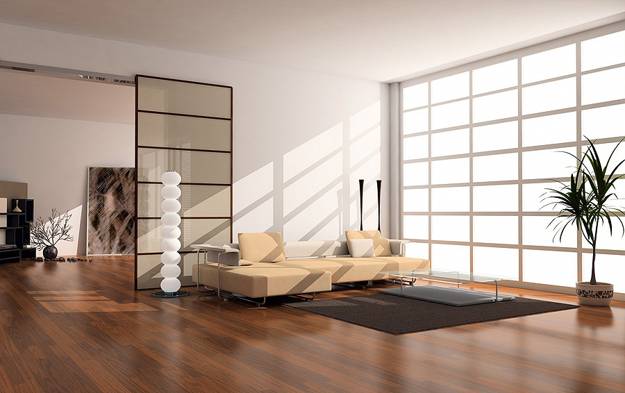
Minimalist interiors: Why less is more for the modern home

image source: decor4all.com
Not many homeowners appreciate the beauty of a minimalist home. But with the busy lives we live today, minimalism is a promising and practical trend for the modern individual.

Minimalist interiors need not be a mattress-and-chair kind of design. While that is indeed the extreme version of it, the minimalist interior design can also reflect the home owner(or designer)’s creative streak through eye-catching pieces that are not cluttery.

The minimalist style traces its roots to ancient Asian civilizations, mainly China and Japan. In Asia, most people are taught to live with less clutter. Even in modern Asian locations, not everyone sleeps on a bed and eats on a dining table full of chairs.

When you incorporate minimalist values into your home, you save a lot by promoting natural lighting and less furniture. The abundance of light is a key feature for minimalist designs. Doors and windows are usually transparent or translucent—as long as they welcome light into the interiors.

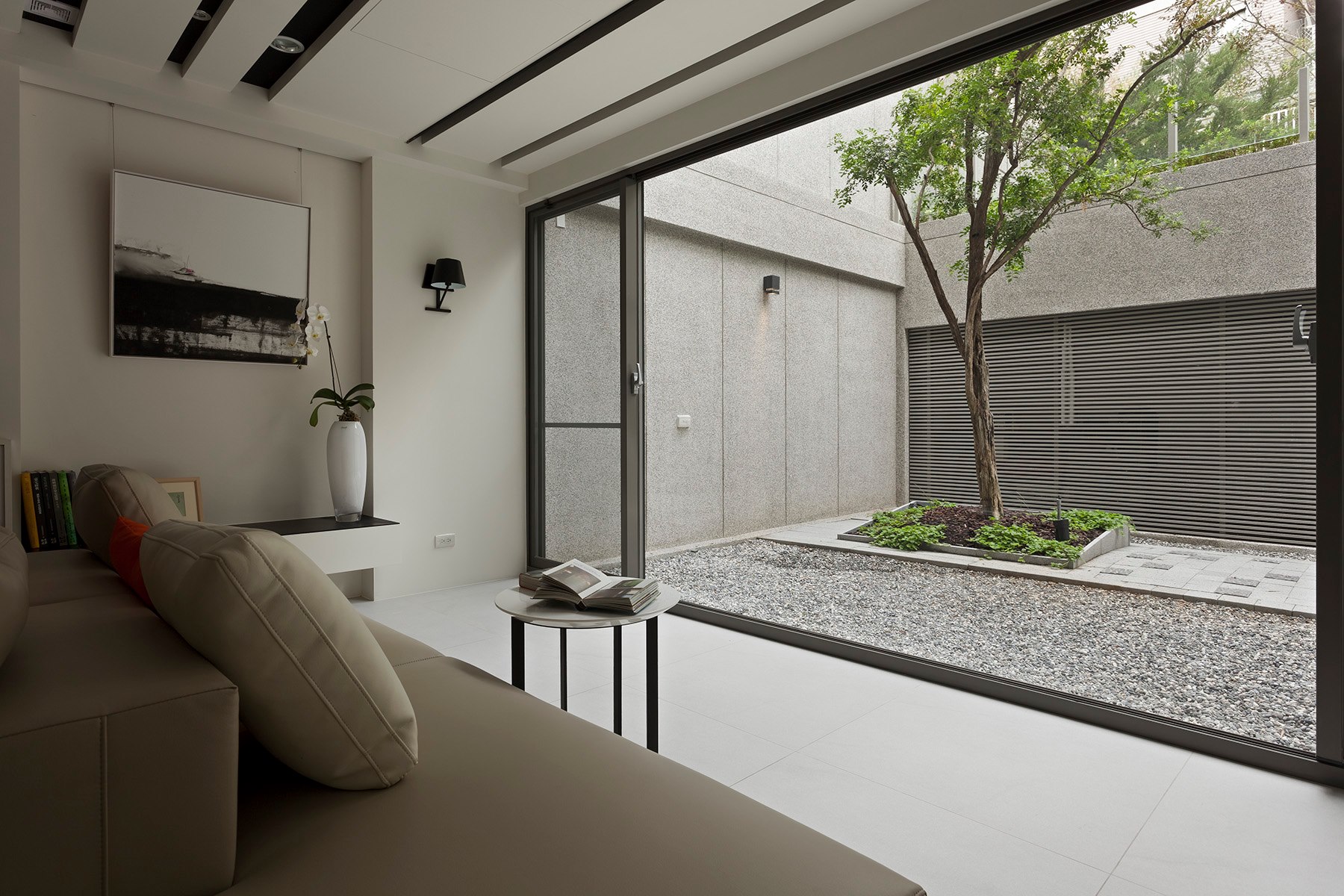
image source: home-designing.com

Asian minimalist design features a lot of connection with the nature. For central pieces, you can settle for a relaxing wall painting or a tranquil water feature. Some Asian interior designers also put wooden statues with cultural significance on some of their home projects.

Jonathan Bunge here. Know more about architecture and interior design trends when you visit this blog.

Monday, January 18, 2016

Five Awe-inspiring Websites for Design Inspiration

There are times when creativity and talent are not enough to produce a good architectural design. Despite being in the business for years now, I still find myself hungry for that special “something” to get my train of thought running. And so, like everyone else, I browse the Internet for inspiration.

For those in need of design inspiration, these websites are highly recommended:

Archiphile (www.archiphile.tumblr.com). While the blog owner remains anonymous until this day, his page, which contains hundreds of interesting building designs from different countries, has inspired thousands of designers throughout the years.

Image source: lifewithoutbuildings.net

ArchDaily Error! Hyperlink reference not valid. architectural website that probably attracts the most traffic in the world, ArchDaily provides readers almost anything architecture—from news and features to the latest designs and trends in the industry.

Houzz Populated with user-uploaded content (mostly photos), this website does more than selling various products online. You’d be surprise on what you can actually find here.

Image source: cascadecoil.com
Apartment therapy. I consider this website more of an online magazine with much content about style and DYI features. I recommend this to those who are more methodical with their concepts.

Abitare. The website is owned by one of the world's best known design magazines, Abitare, which has been running since the 60s. Apart from architecture, the website also focuses on interior design, furniture, product design, and graphic arts.

These websites, which I consider my style bibles, have helped me through rough times. I hope they can help you, too.

I am Jonathan Bunge, an architect and a lover of art. Follow me on Twitter for discussions on structure and design.

Wednesday, December 16, 2015

Fueling a Creative Mind

It goes without saying that we are all born with the potential to be creative. In the course of history, people have uses their creativity to develop great ideas for the benefit of mankind, be it in the world of arts, science, or business.

http://wowprezi.com/wp-content/uploads/2014/10/bigstock-Creative-Mind-62583047.jpg
Image source: wowprezi.com

While it is given that some people are naturally creative than others, it is important to remind ourselves of what our minds are capable of. Fuel your mind’s creative power by following these tips:

Find your natural expertise. Ask yourself, “What am I good at?” We all different skills, talents, and abilities and it is important to devote our time to develop our inherent gifts.

Look for sources of inspiration. Back in college, our professor always reminded us to look for new sources of inspiration. I am an experiential learner, and my taste varies widely, so I took my time to research my favorite architects and visited some of their famous works. Such technique gave me fresh ideas, and it helped me generate designs for my project.

Take risks. To test your abilities, be willing to take risks. Failure does not mean your ideas are bad. It could mean many things, perhaps, some improvement.

Don’t give up, and believe in yourself. Always remember, we are all born with the potential for creating incredible things.

http://steiv.com/wp-content/uploads/2014/06/Screen-Shot-2014-06-25-at-2.30.22-PM.png
Image source: steiv.com

Discover more ways to unleash your creativity by following this Jonathan Bunge Twitter page.

Monday, November 30, 2015

My Job Explained: Life as an Architect

This morning, I have taken the time to reflect on my past accomplishments and focus my thoughts on my life as an architect. I always wanted to become an architect. Growing up playing with building blocks and miniature houses, I eventually moved on studying the craft by taking architecture in college.

Most people would picture an architect as some sort of an artist working on his draft boards all day to come up with cool building ideas. This image is true in some aspects, but it is really just a small portion of the job.


Image source: jobshadow.com

Being in this field necessitates not only knowledge in design and structures but also in business. The role of an architect changes over time. These days, I spend most of time running a business by doing marketing plans, and by attending meetings with clients, engineers, and contractors. I spend the majority of my day on the phone and in front of my computer answering e-mails.

Stressful? Yes.

But the best part of the job is the approval I get from my clients who are ecstatic and satisfied about my design and how I handle the project. They are people who are not only paying me for my time and expertise, but they are people who believe in my ability. And there’s no better validation than that.


Image source: topgamesmobile.com


Learn more about architecture by following me, Jonathan Bunge, on Facebook.

Wednesday, August 26, 2015

Concrete beauties: Architectural models of the modern world

What makes buildings beautiful? Although beauty is a subjective criterion, there are plenty of buildings that have gained fame either by being featured in movies or by setting records as the tallest ever constructed. The following are some of the architectural marvels of the modern world:

Empire State Building, USA

Located in the heart of New York City, the Empire State Building gained fame through a myriad of films shot there, including the very iconic “King Kong.” Aside from being a popular setting for films, it's also the third tallest building in the U.S. and ranks 12th in the world.

Image source: taketours.com


Burj Khalifa, UAE

It was previously known as the Burj Dubai before its inauguration. This 2,722-feet skyscraper is considered the tallest man-made structure in the world. Construction started in September 2004, and it was officially opened on January 201o.


The Bird's Nest, China

The Beijing National Stadium, also known as The Bird's Nest, was designed for the 2008 Summer Olympics and Paralympics. It is the world's largest steel structure. It consists of two main structures: a red bowl-shaped, concrete seating area and an outer steel frame that makes it look like a nest.

Guggenheim Museum Bilbao, Spain

The Spanish Guggenheim is a museum for modern and contemporary art, but the building itself is a masterpiece by Frank Gehry. The circular body is a signature design and built mainly with glass,
titanium, and limestone.

Image Source:iloboyou.com


Find out more about ancient and modern architecture by subscribing to this Jonathan Bunge blog.

Friday, July 31, 2015

The Colosseum: Then and Now

The Colosseum, located east of the Roman Forum, was commissioned around 70-72 A.D. by Emperor Vespasian of the Flavian Dynasty as a gift to the people of Rome. In 80 A.D., Titus, son of Vespasian, opened the Colosseum and was officially known as the Flavian Amphitheater. It was inaugurated with 100 days of games, including gladiatorial combats and wild animal fights and was finally completed in the reign of Domitian, the other son.

The Colosseum or Flavian Amphitheater is a large ellipsoid arena. The construction started in the reign of Vespasian on the site where the lake and gardens of Emperor Nero’s Golden House once were. As a precaution for potential earthquake damage, the lake was drained and concrete foundations six meters deep were put down.

Image source: www.telegraph.co.uk


The Flavian Amphitheater or Aphiteatrum Flavium (as it was known to the Romans) was the biggest building of its kind. It had four stories and stood over 45 meters high.

After four centuries of active use, the magnificent arena fell into neglect, and up until the 18th century, it was used as a source of building materials. Though most of the arena has been destroyed over time, the Colosseum still stands as a popular tourist attraction, as well as an iconic symbol of Rome and its long history. Restoration efforts began in the 1990s and have proceeded over the years.


Image source: www.teachingkidsnews.com


On Good Friday, the Pope leads a torchlit “Way of the Cross” procession to the Colosseum. The execution of early Christians in the arena has caused the Catholic Church to consider it as a place sanctified by the blood of martyrs.

Learn more famous architectural designs of the past when you visit this Jonathan Bunge blog.